
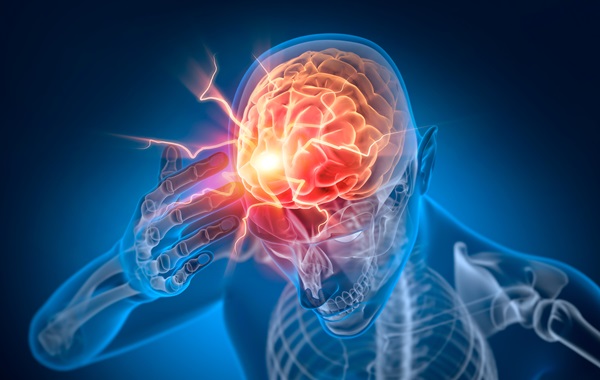
A concussion sustained in a car accident can turn your life upside down without leaving the kind of visible trail that insurance companies prefer. You may walk away from a crash on I-5, Fourth Plain Boulevard, or SR 14 thinking you were lucky, only to find yourself fighting headaches, brain fog, light sensitivity, and dizziness. The situation is made even more challenging if the insurance company steps in and claims your crash had nothing to do with your injury.
At The Scott Law Firm, PLLC, we know how concussion claims often become battlegrounds between injured victims and insurance companies. That’s because Vancouver, WA, car accident attorney Colin Scott has dealt with many complex legal cases involving insurance companies, concussions, and other serious car accident injuries.
Why Are Car Accident Concussion Claims Often Challenged?
Insurance companies frequently dispute concussion claims because the evidence does not always look like the evidence in a fracture, surgery, or spinal cord injury case. A broken bone may appear on an X-ray. A torn ligament may show on an MRI. A concussion often requires proof through symptoms, clinical evaluation, neurological findings, vestibular findings, cognitive changes, medical history, and witness observations over time. That does not make the injury less real. It means the proof must be built with more care. Here are some of the most common reasons why insurers challenge these types of claims in Washington:
That doesn’t make the injury less real. It makes it easier for insurers to attack and deny. Some of the most common reasons insurance companies challenge concussion claims include:
- Delayed Symptoms: The symptoms of concussions and other types of traumatic brain injuries (TBIs) can arise with a delayed onset. That medical reality can open the door for an insurer to argue that something else caused the injury.
- No Loss of Consciousness: A concussion does not always result in loss of consciousness. In fact, many injured victims never black out. Nonetheless, an insurer may try to treat the absence of loss of consciousness as proof that no concussion occurred. That argument overstates the medical significance of one symptom and ignores the broader clinical picture.
- Minimal Vehicle Damage: Adjusters often argue that a low-property-damage crash could not have caused a brain injury. That argument can be misleading. The legal issue is not whether the vehicle looks badly damaged. The issue is whether the forces involved caused the claimant’s head, neck, and brain to move in a way that produced injury.
- Normal CT or MRI Results: A normal scan does not rule out concussion. CT imaging in acute head trauma often looks for dangerous structural injuries, such as bleeding, swelling, or skull fracture. Mild TBI and concussion can still exist even when conventional imaging does not show an acute structural abnormality.
- Subjective Symptoms: Headaches, brain fog, dizziness, fatigue, irritability, memory problems, and light sensitivity often depend on patient reporting. Insurers may call those symptoms “subjective” to make them sound unreliable. A strong claim connects those symptoms to medical records, functional limits, and other tangible issues.
- Treatment Gaps: A gap in care gives the insurer a causation argument. The company may claim that the injury resolved, that symptoms were not serious, or that a later event caused the ongoing problems. Medical context matters.
- Prior Medical History: Migraines, anxiety, ADHD, sleep problems, prior concussions, or earlier neck injuries can become defense themes. To be clear, prior medical history does not automatically defeat a claim. In Washington, an aggravation theory may still support financial recovery when a crash worsens a preexisting condition.
Unfortunately, injured victims in Vancouver and elsewhere in Washington often cannot rely on insurers to look out for their best interests after a crash. When an insurance company sees a concussion claim, it often sees a chance to save money by turning uncertainty to its advantage. That’s why these claims need to be handled with care, attention, and professional skill right from the start of the case.
What Makes A Concussion Easy To Misunderstand?
A concussion is a form of traumatic brain injury (TBI). The Centers for Disease Control and Prevention (CDC) notes that even mild TBI and concussion symptoms can affect how you feel, think, act, or sleep. Some symptoms only show up hours or days later. In other words, this isn’t just a bump on the head. It’s a brain injury that can disrupt your daily life.
That’s part of the reason why these claims get so much pushback. Concussions can be difficult to diagnose. People often look fine. They may even try to keep functioning. They go back to work too soon, show up for family obligations, and force themselves to do things each day. Then the symptoms keep building.
For example, someone rear-ended in Vancouver might skip the emergency room because they feel “shaken up but okay.” Two days later, they find that they can't tolerate computer screens, that they are forgetting simple tasks, or that they constantly feel dizzy. Even so, the insurance company may put the focus on the first two hours after the crash.
What Symptoms Often Lead To Disputes With Insurance Companies?
The symptoms that make concussions disruptive can sometimes be the same ones insurance companies try to downplay. Concussion symptoms that may become points of dispute include:
- Headaches that linger or worsen.
- Dizziness or balance problems.
- Brain fog.
- Memory problems.
- Light and noise sensitivity.
- Mood changes such as irritability, anxiety, or emotional swings.
- Nausea and fatigue.
The Mayo Clinic notes that concussion symptoms can be subtle, may not occur right away, and can get worse over time. Regardless of when such symptoms occur, they should be taken seriously by your doctor, your employer, yourself, and the insurance company handling your claim. Any symptoms of head injury in a car crash should be evaluated by a doctor.
How Do Insurance Companies Try To Minimize Concussion Claims?
Insurance companies do not just come out and say, “We don't believe concussions are real.” Instead, they use more subtle tactics that push toward the same result. Broadly speaking, an insurer’s defense strategy will involve undermining the severity of the injury and/or undermining its link to the crash. Among other things, an insurer may argue:
- “You Did Not Report Symptoms At The Scene.” A crash scene is chaotic. Police officers and paramedics may focus on bleeding, fractures, transport needs, traffic control, and obvious emergencies. A person may not recognize early concussion symptoms until later.
- “You Waited Too Long To See A Doctor.” Delayed care can create a proof problem, but it does not automatically disprove injury. The stronger question is whether the delay has a reasonable explanation and whether the later medical records are consistent with concussion from the crash.
- “The Crash Was Too Minor.” Vehicle damage matters, but it does not end the analysis. A concussion claim should address the mechanism of injury, including head movement, neck forces, rotation, direct impact, bracing, airbag deployment, seat position, and the injured victim’s immediate and delayed symptoms.
- “Your Symptoms Are Stress-Related.” Stress can exist after a crash, but that does not mean the symptoms are unrelated to brain injury. Medical records, neurological assessment, vestibular findings, therapy notes, and before-and-after witnesses can help distinguish emotional distress from cognitive, vestibular, and neurological impairment.
- “Your Medical History Explains Everything.” Prior migraines, anxiety, ADHD, sleep issues, or prior head injuries often become defense themes. Washington law does not allow an insurer to avoid responsibility merely because a person was more vulnerable before the crash. The litigation issue is whether the collision caused a new injury or aggravated a prior condition.
- “Our Examiner Disagrees With Your Doctors.” In litigation, the defense may seek a CR 35 physical or mental examination when the claimant’s condition is in controversy and the court finds good cause. That examination is not the same thing as ongoing treatment. The defense examiner usually evaluates the claimant for litigation, not for continuing care.
What Can Help Make A Concussion Claim Stronger?
The strongest concussion claims usually tell a clear story from collision to symptoms to medical care to daily consequences. The issue isn't just whether you hit your head. The issue is whether the crash changed how your brain and body function afterward.
Your car accident claim can become stronger when there’s documentation showing:
- Early Documentation: Emergency room records, urgent care notes, primary care records, and follow-up appointments can show when symptoms began and how they developed.
- Consistent Medical Reporting: Repeated reports of headaches, dizziness, light sensitivity, sleep disruption, nausea, memory issues, or concentration problems help establish a coherent timeline.
- Specialist Evaluation: Neurology, vestibular therapy, concussion clinic, neuropsychology, optometry, physical therapy, or occupational therapy records may identify functional deficits that a general examination misses.
- Vestibular/Oculomotor Findings: Testing related to balance, eye tracking, gaze stabilization, convergence, dizziness triggers, or vestibular-ocular reflex problems can provide measurable support for symptoms that an adjuster may otherwise dismiss.
- Work/School Impact: Missed time, reduced hours, failed return-to-work attempts, screen intolerance, slower task completion, and written accommodations can show economic and functional loss.
- Before-And-After Witnesses: Spouses, family members, friends, supervisors, and co-workers may notice changes in memory, patience, energy, sleep, mood, driving tolerance, or ability to complete routine tasks.
- Prior Medical Records: Earlier medical records can help when the insurer claims that migraines, anxiety, ADHD, or a prior head injury explain the symptoms. Baseline records may show that the post-crash condition is meaningfully different.
Car Accident Claims Tip: In a fault-based Washington car accident claim, an injured victim must generally prove duty, breach, proximate cause, and damages. For a concussion claim, the pressure point is often the issue of proximate cause. To bring a successful claim, you must present evidence that connects the traffic collision to your brain injury. From there, you must connect the brain injury to your medical expenses, lost wages, pain and suffering, and other damages. An experienced Vancouver auto accident lawyer can help you build a strong, compelling case.
How Can A Vancouver, WA, Concussion Lawyer Help?
If an insurance company pushes back on your concussion claim, that doesn’t mean your case is weak. It often means the insurer doesn’t want to pay you the compensation you may deserve. That’s why it’s critical that you have an experienced Washington car accident attorney who can fight back for you and present your case in a clear, convincing manner.
At The Scott Law Firm, PLLC, we know how insurance companies work. That’s why attorney Colin Scott has achieved successful results for his clients, including a $266,000 recovery for a client who sustained a traumatic brain injury in a crash caused by a reckless driver on I-205 in Vancouver, WA.
Contact us and schedule a free consultation. We work on a contingency fee basis. That means you pay nothing unless we secure compensation on your behalf.
"I highly recommend The Scott Law Firm to represent you. He is personal and professional and helped with my situation successfully. His attentiveness and experience will get you the results beyond your expectations." – Mike M., ⭐⭐⭐⭐⭐
Disclaimer
Web content is not legal advice. Using this website does not establish an attorney-client relationship. If you have questions about a legal matter, you should consult with an attorney who is licensed to practice law in the appropriate jurisdiction and is familiar with the facts in your situation. To learn more about how The Scott Law Firm, PLLC can assist you with a personal injury related matter, contact our office today for a free consultation: (360) 718-3640.